The hidden cost of electrical noise in modern plants
Drives, inverters and switch-mode supplies save energy — but they also inject high-frequency noise that quietly turns into heat, wasted electricity and early equipment failure.
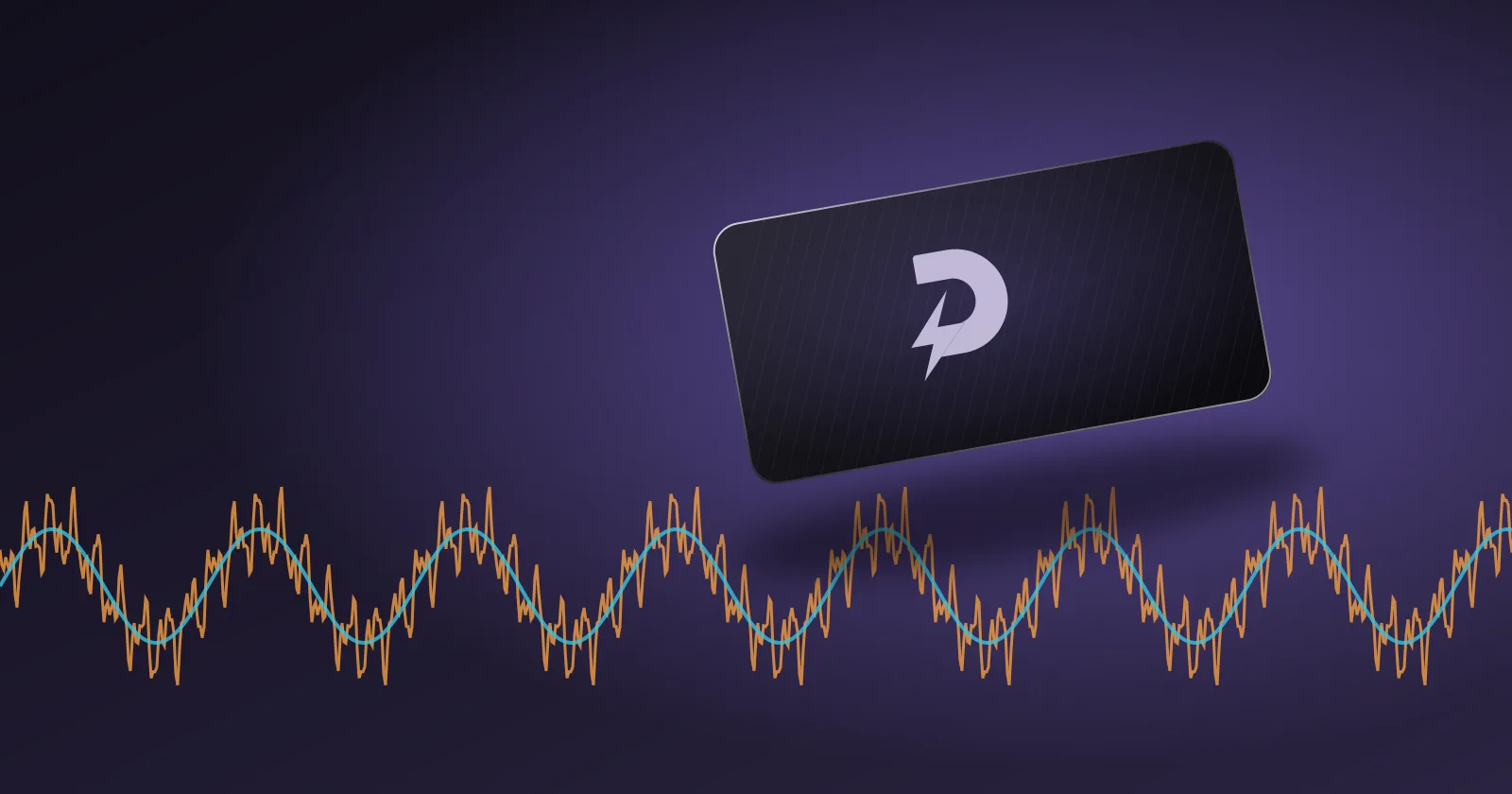
Every modern plant runs on power electronics. Variable-frequency drives, solar inverters and switch-mode power supplies make processes efficient — but their fast switching injects high-frequency electrical noise (150 kHz – 30 MHz) into your own cables.
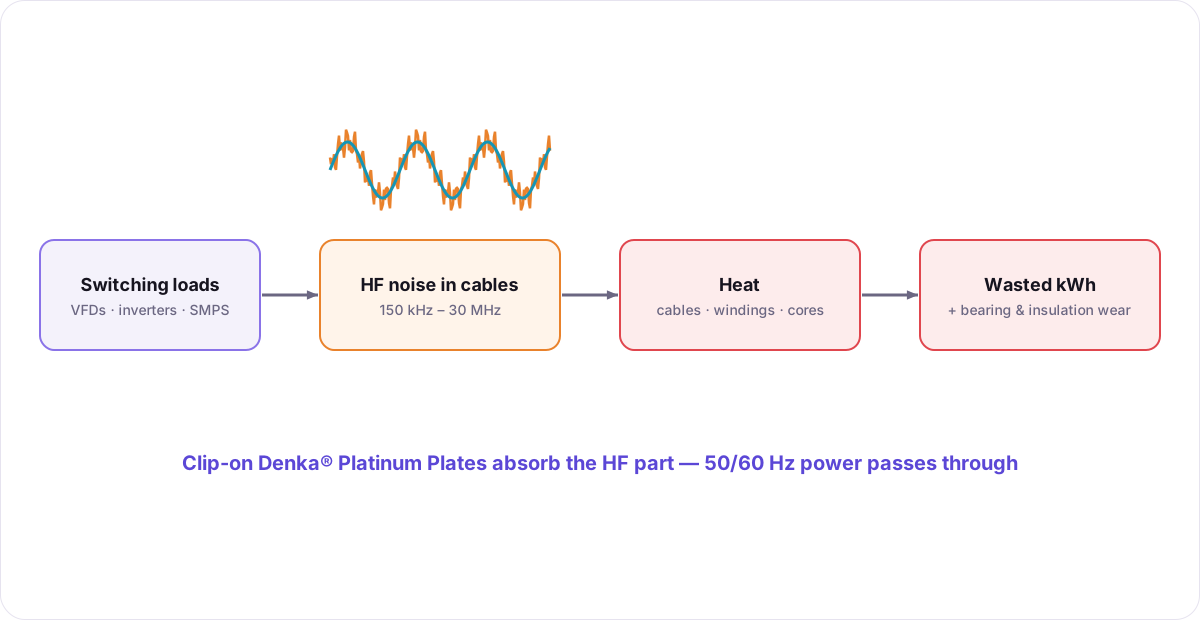 The chain: switching edges → HF noise in cables → heat in conductors and windings → wasted kWh.
Why your power-quality report misses it
Standard harmonic studies focus on low-order harmonics below 2.5 kHz (IEEE 519). The conducted-emission band defined by CISPR 11 — 150 kHz to 30 MHz — sits far above that, so the noise rarely shows up in a routine report. It shows up instead as:
- Hotter motors — peer-reviewed studies report +8.7% to +19% motor losses and about +8 °C winding temperature under converter supply.
- Stressed transformers — eddy-current losses up to +33% and insulation ageing about 22% faster.
- Failing bearings — bearings account for roughly 51% of motor failures; HF common-mode current pits and flutes them from the inside.
A clip-on answer
The Black laser-engraved Denka® Platinum Plate — the one and only Denka product — clips onto existing phase conductors. It has no galvanic connection to your system; it absorbs HF magnetic-field energy and leaves 50/60 Hz power untouched. No rewiring, no downtime, no maintenance.
What the evidence says
- Independent laboratory testing at KU Leuven / EnergyVille measured 13–15% HF attenuation per plate at 25–30 MHz.
- Across 100+ facilities, sites typically see 8–15% lower specific energy consumption, reaching up to ~20% at select sites.
- Example: Nestlé Waters Jordan recorded 14.7% average savings over July–August 2026 against an adjusted baseline.
Every result is measured on your own meters and backed by a 90-Day Result-Conditioned Money-Back Guarantee.